
RISE Up to Better Communication
Emily Wray, creator of the RISE Model, was featured guest on the "Investment of Self" podcast with coach Kathy Washburn. In this episode they delve into the intricacies of the RISE Model as a transformative approach to communication and feedback.
Emily shares the origin and purpose of the RISE Model, detailing the 4 levels of meaningful feedback: Reflect, Inquire, Suggest, and Elevate. Kathy and Emily explore the impact of the RISE model on interpersonal relationships and professional development. From addressing type-c tendencies to navigating challenging conversations, they illuminate the power of RISE in fostering deep connections and personal growth.
RISE for Professionals With Type C Tendencies
This demo is an excerpt from the Investment of Self podcast featuring Emily Wray, the creator of the RISE Model for meaningful feedback. In Episode 15 - "RISE Up to Better Communication" - host Kathy Washburn and Emily collaborate on an example of how a professional with Type C tendencies could leverage the RISE Model as a self-reflection tool and conversational framework. Type C personalities tend to be people pleasers who have a hard time accessing, acknowledging, and addressing their own feelings and needs.
RISE for People With Type C Tendencies
This demo is an excerpt from the Investment of Self podcast featuring Emily Wray, the creator of the RISE Model for meaningful feedback. In Episode 15 - "RISE Up to Better Communication" - host Kathy Washburn and Emily collaborate on an example of how a person with Type C tendencies could leverage the RISE Model as a self-reflection tool and conversational framework. Type C personalities tend to be people pleasers who have a hard time accessing, acknowledging, and addressing their own feelings and needs.
RISE for Students
In this educational video, we explore the power of peer feedback and how to give meaningful input using the RISE Model. Watch as we dive into the four key steps - Reflect, Inquire, Suggest, and Elevate - to learn how to provide feedback that helps us grow as individuals and meet our shared goals.
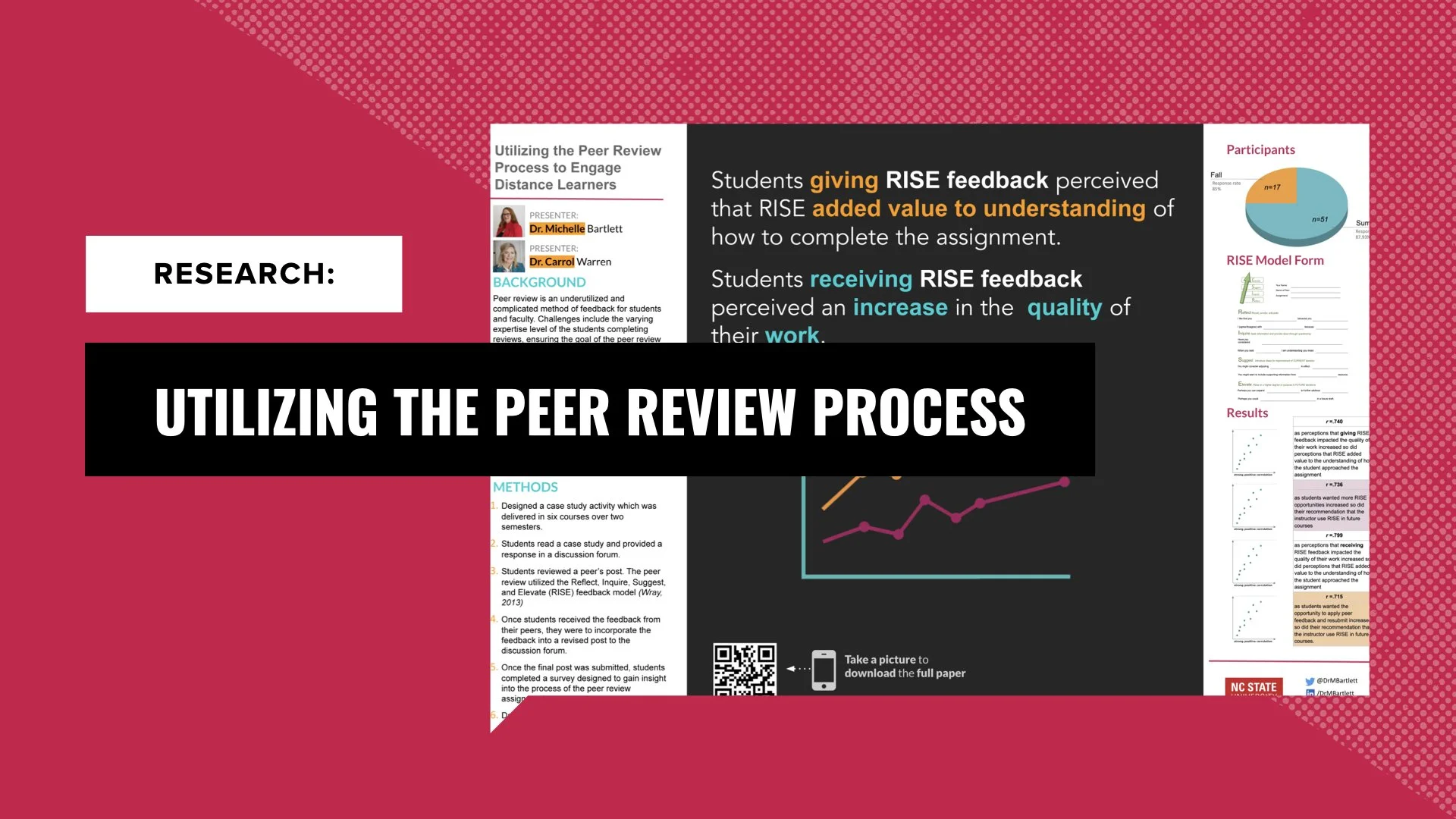
Utilizing the Peer Review Process to Engage Distance Learners
This research project focuses on the utilization of the peer review process, specifically embedding the process into assignments designed for delivery in distance graduate courses. Three graduate faculty designed a case study activity which was delivered in six courses delivered in three different semesters. The assignment instructed students to read a case study and provide a response in a discussion forum. Students were then asked to review a peer’s post. The peer-review utilized the Reflect, Inquire, Suggest, and Elevate (RISE) feedback model (Wray, 2013) as a structured way for students to develop the skills to deliver formative feedback as a way to review the work of their peers.
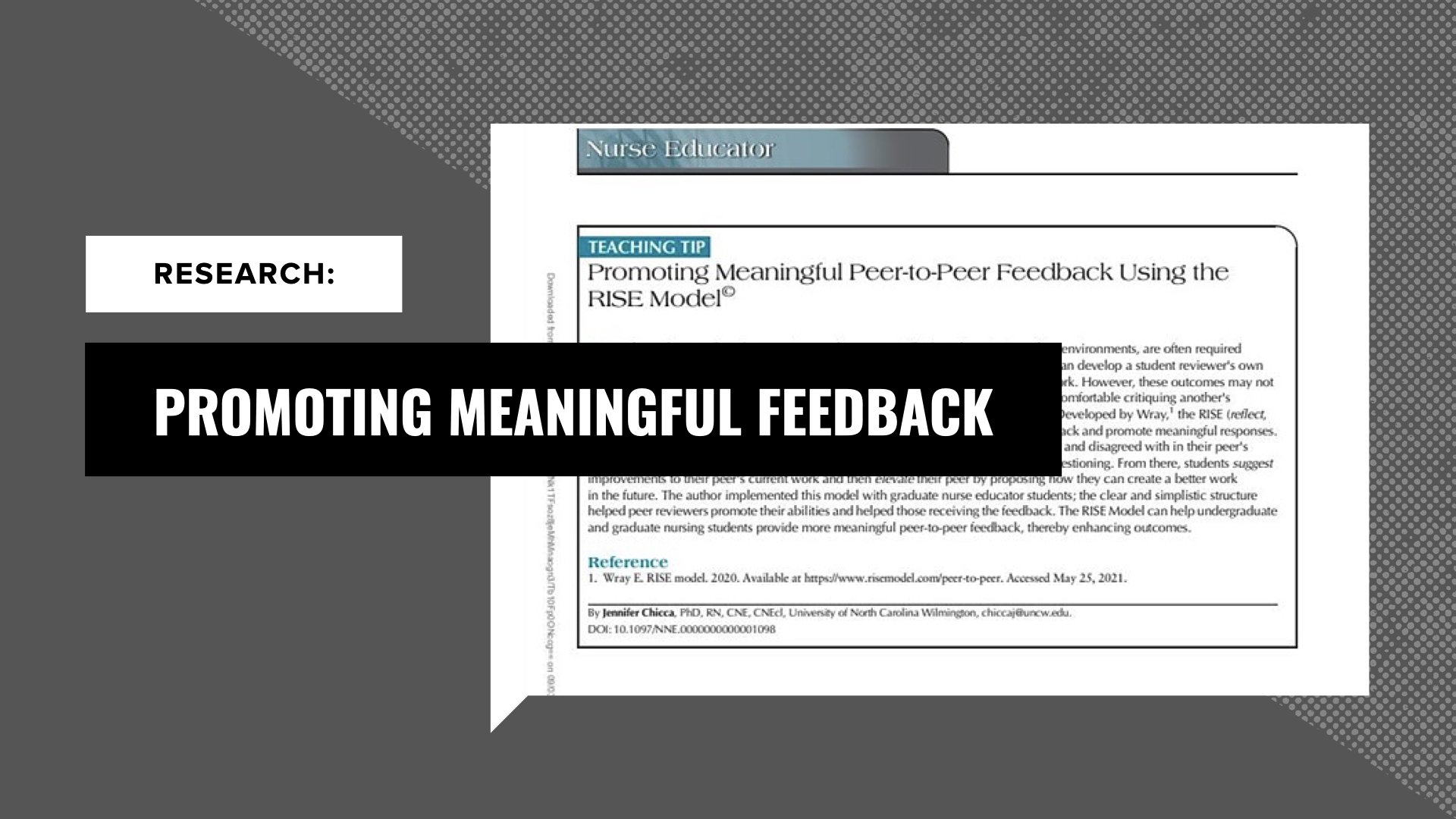
Promoting Meaningful Peer Feedback Using the RISE Model
Undergraduate and graduate nursing students, especially those learning in online environments, are often required to provide peer feedback as part of their coursework. Providing peer feedback can develop a student reviewer's own knowledge, skills, and abilities and help the receiver of the feedback improve their work.
Peer Feedback Among Nursing Students: Does it Enhance Learning?
Teaching is an important aspect of a nurse’s role; they teach patients, their families, and novice nurses or newly hired nurses (Irvine et al., 2017). Students must learn the process of teaching in nursing school and develop teaching as they move through different clinical experiences.
RISE Translations
Thanks to a collaboration with the International Federation of the Red Cross and Red Crescent Societies, the RISE Model has now been translated into 11 additional languages!
Scaffolding Growth with Vygotsky’s Zone of Proximal Development
Most people aren’t taught how to give or receive feedback—they’re expected to just know. Vygotsky’s Zone of Proximal Development shows us that skills like feedback thrive with a little structure and support. That’s exactly what RISE provides: a scaffold that turns feedback into a teachable, transferable habit.
What Maslow’s Hierarchy of Needs Teaches Us About Feedback
Feedback can feel risky because it touches on our deepest needs—for safety, belonging, and esteem. The RISE Model honors these emotional layers, helping individuals feel seen and supported as they grow. By creating psychological safety, RISE makes space for authentic development and self-actualization.

Building Human Skills: RISE + Second Step High School
To help students develop real-world communication, collaboration, and critical thinking skills, Committee for Children integrated the RISE Model into its Second Step® High School Program. RISE offers a structured, student-centered approach to peer feedback that supports strategic thinking, empathy, and adaptability. With tools like educator guides, feedback templates, and videos, RISE empowers teachers to create meaningful learning experiences that build students’ confidence and readiness for life beyond the classroom.
How Social Emotional Learning Shapes the RISE Model
Feedback is an emotional experience shaped by our sense of self and social context. The RISE Model brings Social Emotional Learning to life by helping individuals navigate feedback with empathy, curiosity, and confidence. It turns peer and performance reviews into moments of connection, not conflict.
How Cognitive Learning Theory Supports the RISE Model
Feedback isn’t a reflex—it’s a mental process shaped by memory, perception, and interpretation. Grounded in Cognitive Learning Theory, the RISE Model helps learners slow down and process feedback with intention, activating deeper thinking and more meaningful action. It’s a practical scaffold for developing reflection and growth in any learning environment.
RISE & AI
Dr. Stacey MacKinnon of the University of Prince Edward Island transformed her classroom feedback process by integrating the RISE Model with AI through the Stemble platform. With 250+ first-year students, providing detailed, individualized feedback was challenging. The RISE Model—Reflect, Inquire, Suggest, Elevate—was embedded into the AI platform, enabling scalable, high-quality peer feedback. Students improved their critical thinking and feedback skills while receiving consistent, actionable insights.
RISE & The Red Cross
The International Federation of the Red Cross (IFRC) integrated the RISE Model into their Limitless program to mentor over 10,000 youth addressing local climate challenges worldwide. By adopting the RISE framework for meaningful feedback, which was translated into 11 languages, the IFRC supported the development of 100 innovation leads. These mentors used RISE to facilitate structured, impactful feedback, fostering idea development and collaboration across diverse cultural contexts.
RISE & Career Readiness
The University of South Florida (USF) adapted the RISE Model for meaningful feedback to enhance their Career Readiness badging program. By introducing an additional "Align" stage, creating the (A)RISE framework, USF trained peer coaches to provide structured, impactful feedback that aligned with the program's goal of developing eight essential career competencies. Over 3,000 students benefited from feedback that helped them articulate skills for interviews, resumes, and beyond.